
STADA Arzneimittel AG and Cracking One of the World's Toughest Markets
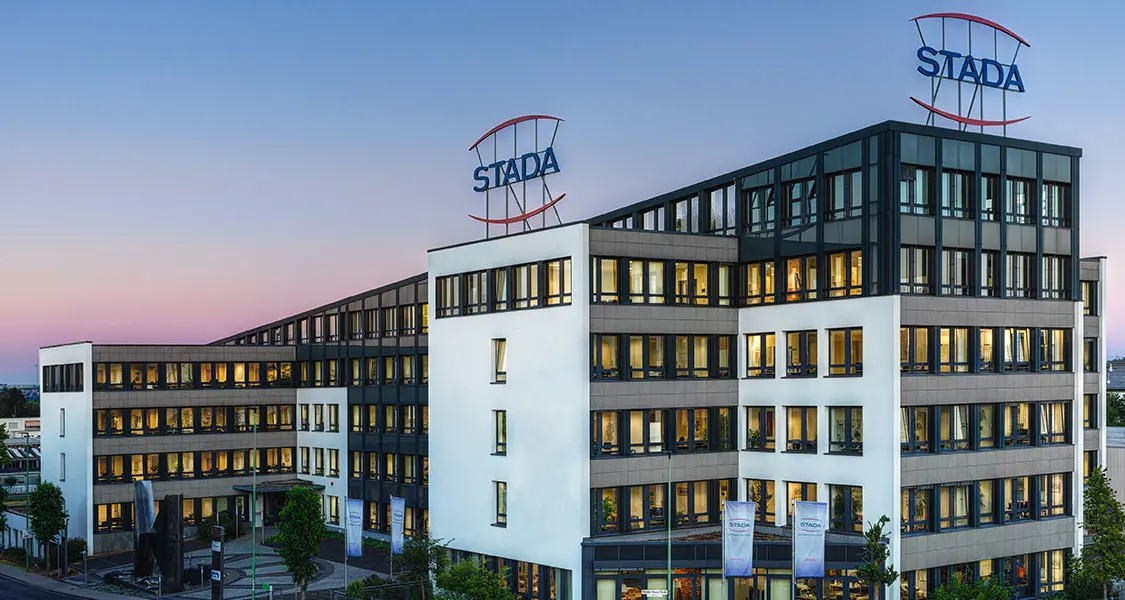
STADA Arzneimittel AG headquarters in Bad Vilbel, Germany — the company's global base for pharmaceutical research, production, and quality assurance.
How 1966 Americas turned a decade of failed attempts into a functioning Brazilian consumer healthcare business — through an acquisition-led market-entry strategy built around STADA's Eunova brand.
At a glance
Speed: From acquisition to fully staffed operations in three months
Reach: Eunova products in more than 1,000 retail outlets within nine months
Structure: An acquisition-led entry strategy that gave STADA an immediate regulatory and operational platform
End-to-end: Regulatory assessment, acquisition, launch, and eventual transition — a complete market-entry lifecycle
A Decade of False Starts
Headquartered in Germany, STADA Arzneimittel AG — an international healthcare company specializing in branded consumer healthcare, generics, and specialty pharmaceuticals — had built a highly successful international expansion strategy, initially across Central and Eastern Europe. The company subsequently began exploring opportunities in the BRICS economies, focusing on its established strengths in branded consumer healthcare products, generics and specialty pharmaceuticals.
Brazil was an important strategic target. It was Latin America's largest pharmaceutical market, ranked among the top five healthcare markets globally and offered enormous commercial potential, both domestically and as a platform for wider expansion across Latin America.
However, STADA's previous attempts to enter the country—extending over approximately a decade—had proved costly and had not produced an executable strategy. Earlier assessments had underestimated the opportunity, partly because the proposed operating model depended heavily on expatriate executives relocating to Brazil. This created internal resistance to entering the country that was fundamentally at odds with the scale and potential of the market and the successful presence of many other multinational pharmaceutical companies.
The underlying challenge was execution. Brazil is one of the world's most complex and bureaucratic markets in which to establish and operate a business. In healthcare, these challenges are compounded by lengthy regulatory and product-registration processes, strict licensing requirements and the need to coordinate corporate, manufacturing, taxation, employment, logistics, distribution and retail relationships.
Success would require more than a conventional market study. STADA needed a trusted partner capable of translating its international strategy into a practical local operating model and navigating the many interconnected barriers to entry.
STADA's relationship with Brazil had strengthened in 2014, when Pelé became a global ambassador for Eunova, its established European multivitamin brand. With the 2016 Olympic and Paralympic Games approaching, STADA asked 1966 Americas to reassess the opportunity and identify a practical, lower-risk route into the Brazilian market.
Mapping the Real Barriers to Entry
1966 Americas was initially retained to evaluate the regulatory environment for establishing a pharmaceutical company in Brazil. The assignment included examining:
The corporate and pharmaceutical licenses required to operate
The regulatory treatment of imported healthcare products
Product-registration and approval processes
Local manufacturing alternatives
Distribution and retail-market structures
The cost, timing and operational risks associated with different entry strategies
Working with STADA's international business-development executives, we evaluated consumer healthcare categories in which the company possessed strong brands, differentiated products and relevant technology.
Vitamins and nutritional supplements emerged as a particularly attractive opportunity. Centrum was already established as a premium market leader in Brazil, demonstrating consumer demand for trusted international brands. STADA's Eunova range competed successfully within the same category in Europe and offered formulations, packaging and delivery formats capable of creating a compelling proposition for Brazilian pharmacy retailers and consumers.
An Acquisition-Led Path to Market
Through its research and established network, 1966 Americas developed a market-entry strategy designed to accelerate STADA's launch while limiting its initial capital exposure and regulatory risk.
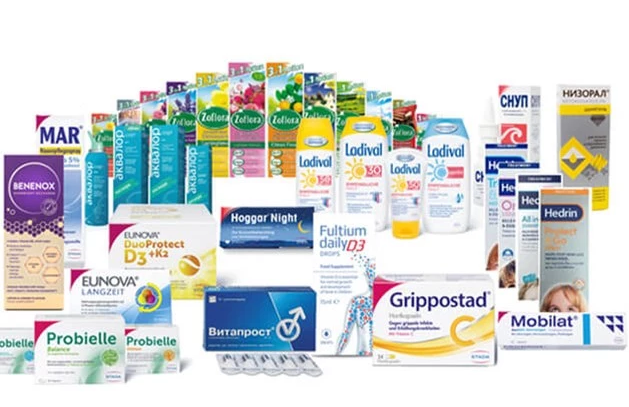
STADA's over-the-counter consumer healthcare product portfolio, including branded and generic formulations across vitamins, nutritional supplements, and wellness categories.
The strategy centered on acquiring Millipharma, a locally established pharmaceutical company with the licenses and infrastructure needed to operate in Brazil. This provided STADA with an immediate corporate and regulatory platform rather than requiring it to create an operation entirely from the ground up.
We also identified experienced Brazilian white-label manufacturers with established formulations that could be adapted for the Eunova portfolio. Using locally manufactured products materially reduced the time, cost and regulatory uncertainty associated with importing and registering an entirely new product range.
Following development of the strategy, 1966 Americas was retained to oversee:
The acquisition and integration of Millipharma
Regulatory and operational market-entry planning
Coordination with Brazilian legal, accounting and regulatory advisors
Selection and management of local manufacturing partners
Localization of the Eunova portfolio and packaging
Brand positioning and launch strategy
Recruitment and establishment of the Brazilian operation
Sales, merchandising and retail-distribution development
Marketing, administration and back-office operations
1966 Americas acted as the operational bridge between STADA's senior leadership in Germany and the many stakeholders required to establish the business in Brazil. This involved aligning international corporate requirements with local commercial realities while coordinating advisors, manufacturers, employees, distributors, retailers and marketing partners.
The engagement therefore expanded from an initial regulatory study into the acquisition, creation and launch of a fully functioning Brazilian consumer healthcare business.
From Acquisition to Nationwide Distribution
The acquisition of Millipharma was completed in October 2015. By the end of that year, STADA's Brazilian subsidiary had been established, with fully staffed operations commencing in January 2016.
An initial four-person sales team was created to focus on the major urban markets of São Paulo and Rio de Janeiro before extending distribution more widely across both states.
The Brazilian Eunova range was officially launched on World Health Day, April 7, 2016. Pelé and Cafu both participated in the launch, which also supported Fundação Cafu and the Associação Desportiva para Deficientes.

Pelé and Cafu during World Health Day 2016.
Within six months of the acquisition, 1966 Americas and its partners had localized the brand, created the Brazilian packaging and introduced an initial portfolio of seven Eunova products tailored to different consumer needs.
The range secured placement with important national and regional pharmacy groups, including Droga Raia, Panvel and Pague Menos. Within nine months, Eunova products had achieved distribution through more than 1,000 retail outlets across São Paulo and Rio de Janeiro states.
During the first year, we also developed the company's future product pipeline. This included direct-to-mouth powder formats and products addressing broader wellness and seasonal cold-and-flu needs, drawing on successful brands, formulations and technologies from STADA's European consumer healthcare portfolio.

Pelé at the Eunova product launch event held at Clube Esperia in São Paulo, a partnership between ADD and Millipharma. April 2016. Photo by Marcos Júnior Micheletti.
What the Project Proved
The project demonstrated that a market previously considered too difficult, slow and expensive to enter could be successfully navigated through a disciplined combination of:
Local regulatory and commercial knowledge
An acquisition-led market-entry strategy
Experienced in-country management
Local manufacturing and product adaptation
Focused recruitment and operational execution
Established relationships with distributors and retailers
Effective coordination between international leadership and Brazilian stakeholders
In late 2016, STADA reassessed its international portfolio and divested the Brazilian operation. 1966 Americas oversaw the separation from STADA and supported the successful transition of Millipharma under its new ownership through 2018.
From initial market analysis through acquisition, regulatory navigation, operational launch, product development, nationwide retail engagement and eventual transition, 1966 Americas provided an end-to-end solution for corporate expansion into one of the world's most complex business environments.
The engagement demonstrated our ability not only to identify an international growth opportunity, but also to negotiate the regulatory, cultural and operational challenges required to turn that opportunity into a functioning local enterprise.
Key Takeaways
Acquisition can beat organic entry. A decade of conventional market studies hadn't produced a workable strategy. Acquiring an existing licensed operator gave STADA an immediate regulatory and operational platform — turning years of anticipated delay into months.
Local manufacturing removes friction. Adapting formulations for Brazilian white-label manufacturers, rather than importing and registering an entirely new product range, materially cut the time, cost, and regulatory uncertainty of the launch.
A trusted local partner can span the entire lifecycle. From the initial regulatory study through acquisition, launch, retail distribution, and eventual transition, one team carried the strategy end-to-end — aligning German corporate leadership with the realities of operating in Brazil.
Entering a complex market takes more than ambition — it takes a strategy built around how that market actually works, and a partner who can execute it from first study to full operation.