
The Beach Boys and Turning a Scattered Archive into a Collector's Legacy
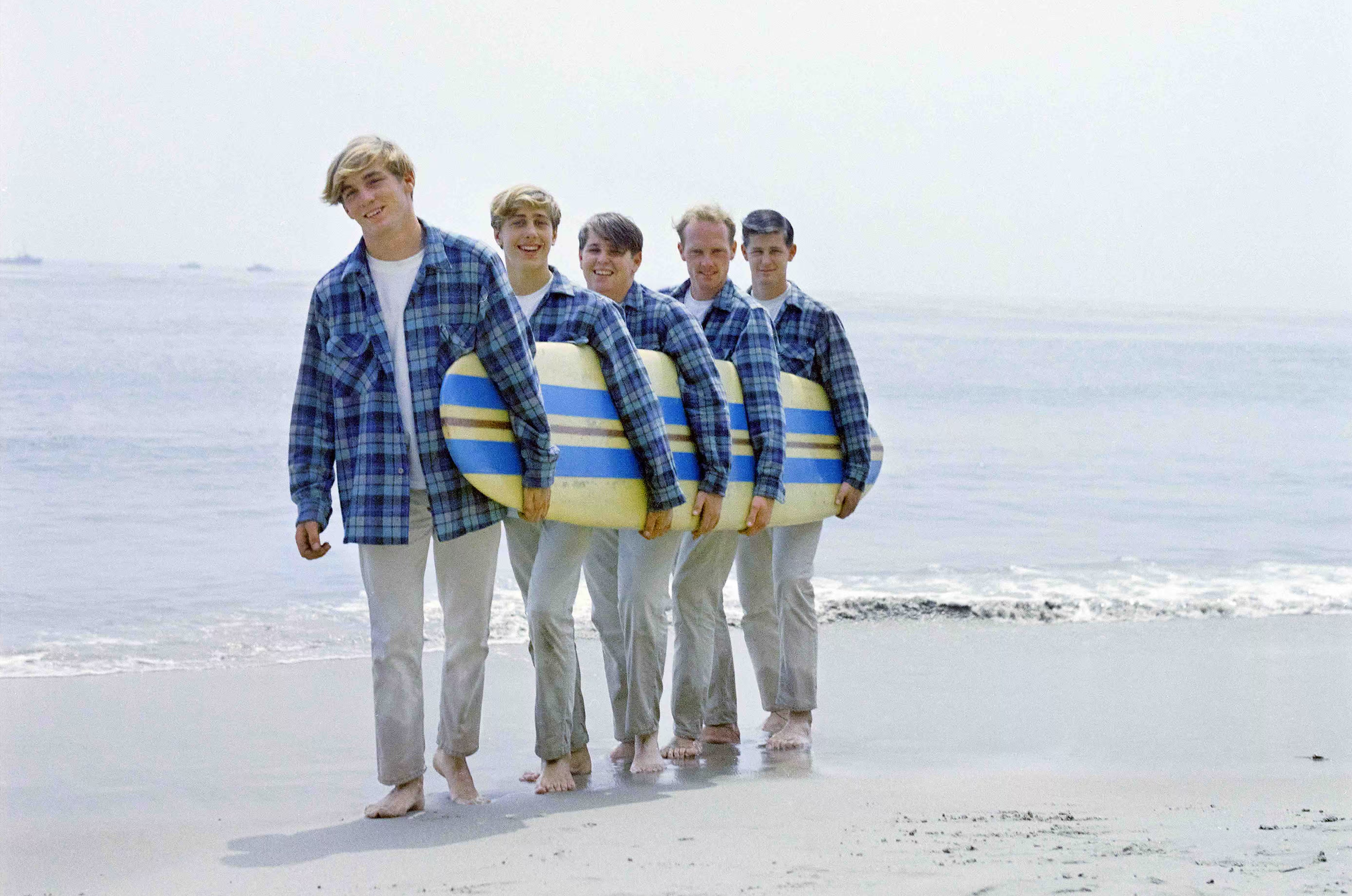
How 1966 Americas tracked down decades of dispersed photography to fuel The Beach Boys' 60th anniversary celebration — from a sold-out collector's book to fine-art exhibitions across three continents.
At a glance
Research depth: Reviewed approximately 10,000 photographs to select the several hundred that would define the collection
Collector demand: A 500-copy limited-edition book, including rare band-signed editions, sold out
Global reach: Fine-art exhibitions staged in New York, Los Angeles, and London
Cultural moment: Supported the band's 60th anniversary program alongside the 2024 Disney+ documentary launch
A Legacy Ready for a New Chapter
In 2021, The Beach Boys entered a partnership with Iconic Artists Group (IAG), which acquired a controlling interest in the band's intellectual property. The agreement marked a new chapter in the history of one of America's most influential and enduring bands.
The 60th anniversary of the band's first album, Surfin' Safari, followed in 2022. Plans were being developed for a multiyear celebration that would include a television special, documentary, official limited-edition book, music reissues, merchandise and other legacy initiatives.
The Beach Boys and IAG controlled an extensive archive of memorabilia and ephemera. However, many of the most important photographs from the band's formative years were owned by Capitol Records or individual photographers and their estates.
Despite the band's worldwide popularity, relatively few photographs from this defining period were readily available for licensing or commercial use. These years—from the release of Surfin' Safari in 1962 through Pet Sounds, "Good Vibrations" and the band's continuing creative evolution—produced some of its most important music and established the visual identity of the California sound.
The opportunity was to identify, preserve and activate this dispersed photographic history, creating new ways to celebrate the anniversary while establishing assets that could support The Beach Boys' legacy for years to come.
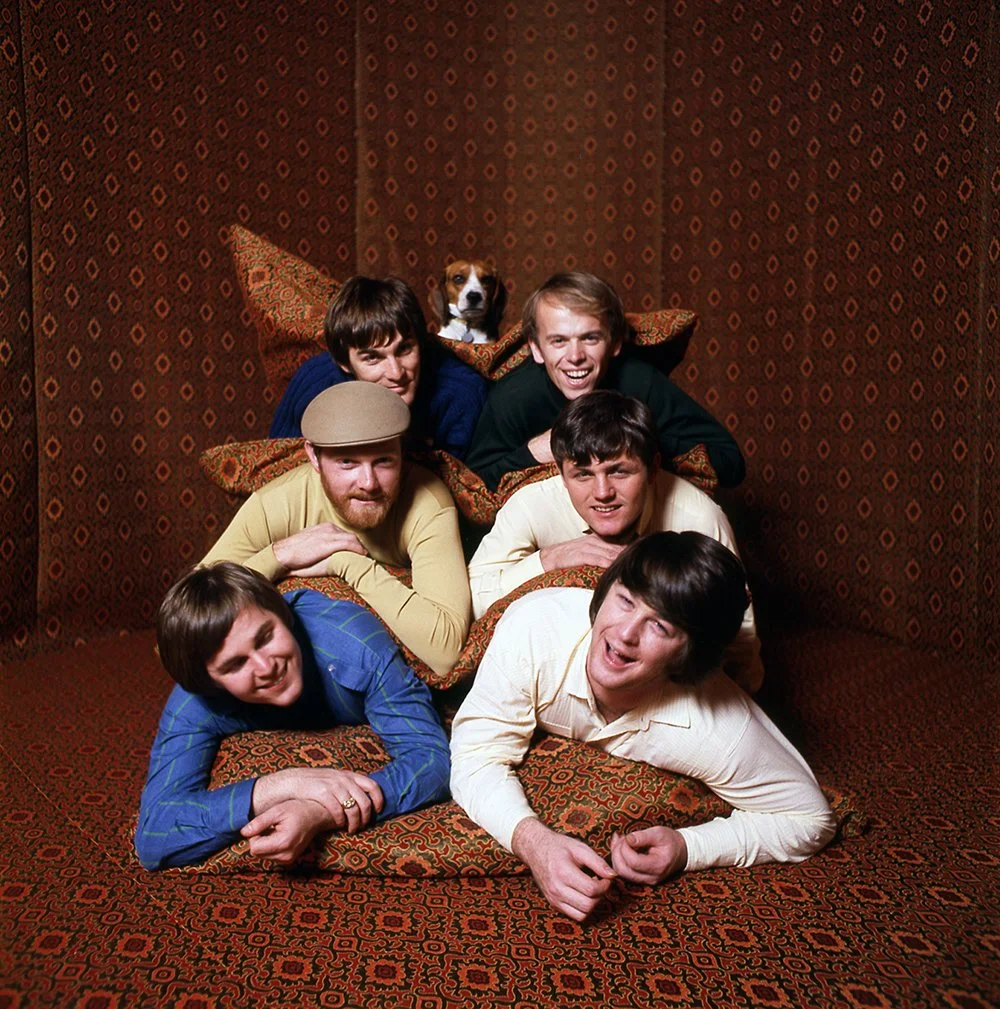
The Beach Boys piled on patterned cushions in a tent-like space with bold vintage fabric at Brian Wilson's Bellagio Road house in Los Angeles, 1967. Photographed by Guy Webster during the era of the Smile project.
Tracking Down a Dispersed History
1966 Americas conducted extensive research across The Beach Boys' history, the band's own archive and the photographic collections associated with Capitol Records and EMI. This work uncovered a significant body of rarely seen and previously unreleased images documenting the band's formative years.
We contacted renowned photographers including Julian Wasser and Guy Webster, gaining access to additional photographs that had rarely—or never—been made commercially available. We also established relationships with the families and archives of photographers closely associated with Capitol Records, including Ken Veeder, who headed the label's photography department, Earl Leaf, George Jerman and Ed Simpson. Working with the band's archivists, we were able to add important historical context to the images and reconstruct details surrounding individual shoots.
After reviewing approximately 10,000 photographs, 1966 Americas selected several hundred images capturing the essential elements of The Beach Boys' story: early recording sessions, touring, live performances, informal moments and outtakes from important record-label shoots.
Building a Collector's Program
Working with the band, IAG and specialist partners, we developed a fine-art photography collection of limited-edition archival prints. The objective was to establish a collector program comparable in quality and significance to those created around contemporaries such as The Beatles and The Rolling Stones.
A highly exclusive collection of three photographs was then selected to be signed by Brian Wilson, Mike Love, Al Jardine and Bruce Johnston. These rare, band-signed editions created exceptional collector pieces suitable for presentation through leading photography galleries and to VIP clients.
Bringing the Collection to the World
Fine-art exhibitions were staged in New York, Los Angeles and London, introducing the collection to collectors and celebrating The Beach Boys' photographic history alongside the wider anniversary program.
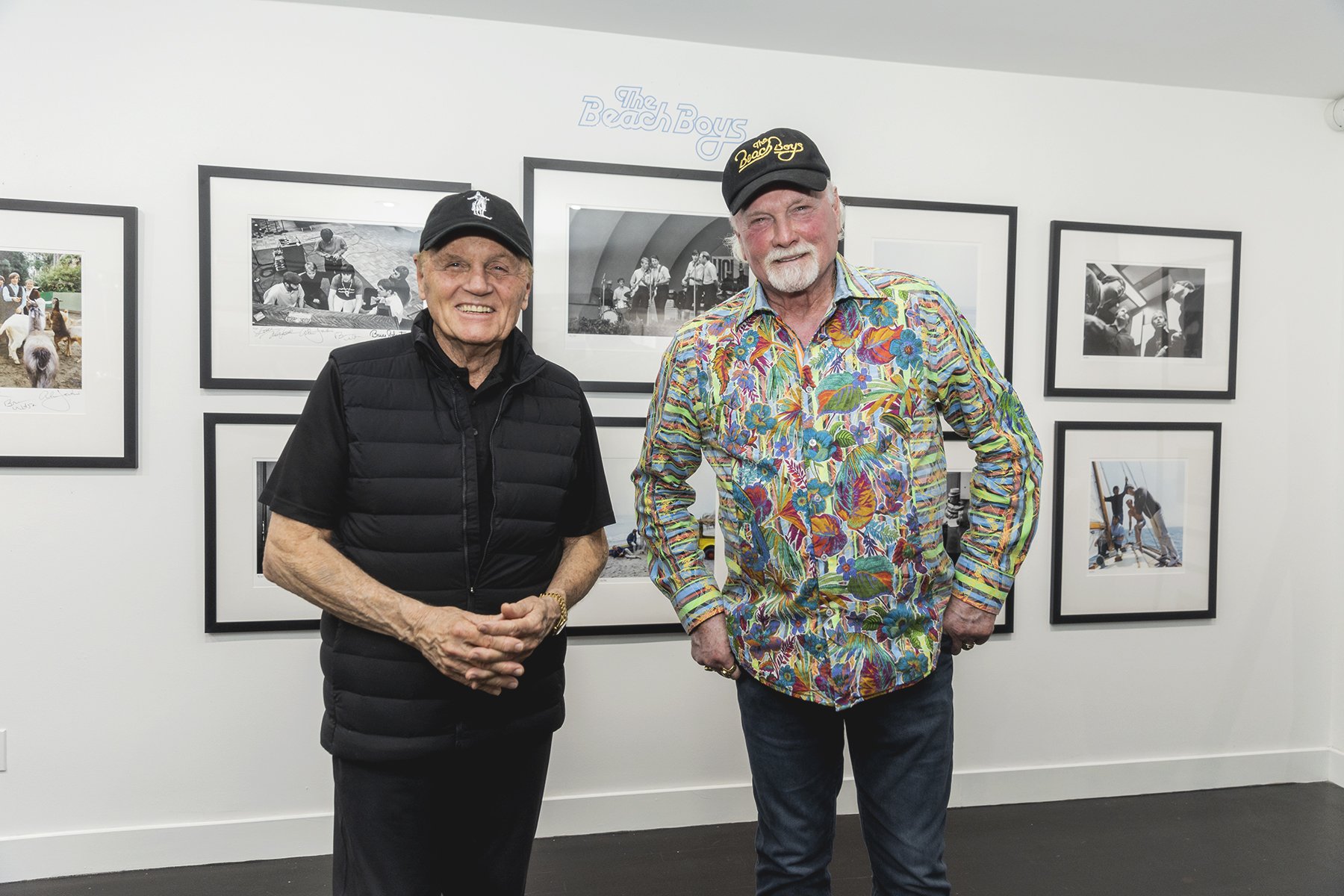
Beach Boys bandmates Bruce Johnston and Mike Love together at a photography gallery exhibition.
Working with Genesis Publications on The Beach Boys by The Beach Boys, the band's official limited-edition book, we provided exclusive photographic prints for its highest-value collector packages and made the band-signed editions available to selected VIP customers. The 500-copy edition, signed by Brian Wilson, Mike Love, Al Jardine and Bruce Johnston, subsequently sold out.
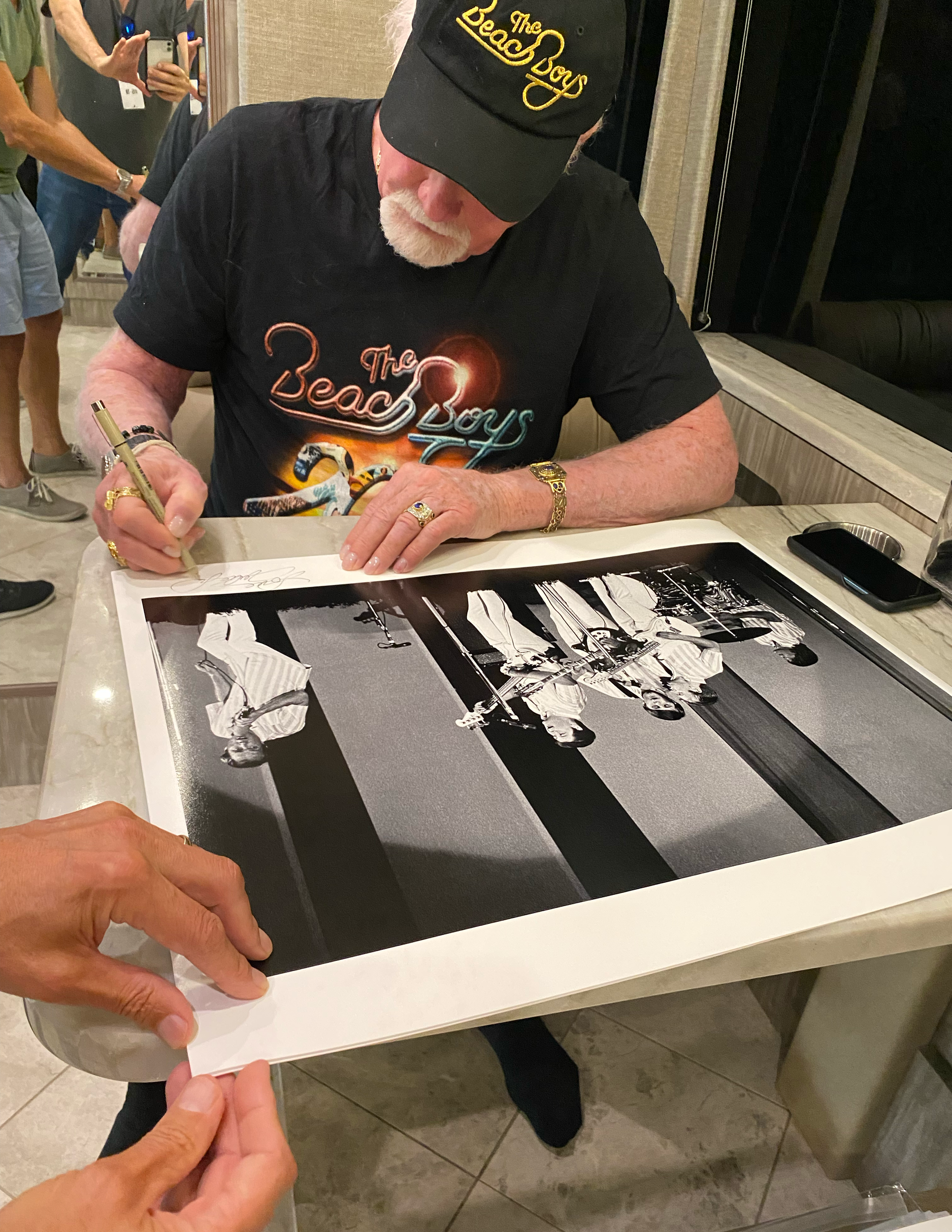
Mike Love signing photographic prints before they sold out.
We also helped stage events at Soho House and photographer Terry O’Neill Iconic Images Gallery in London in connection with the 2024 launch of The Beach Boys documentary on Disney+, with Mike Love and Bruce Johnston participating in the celebrations.
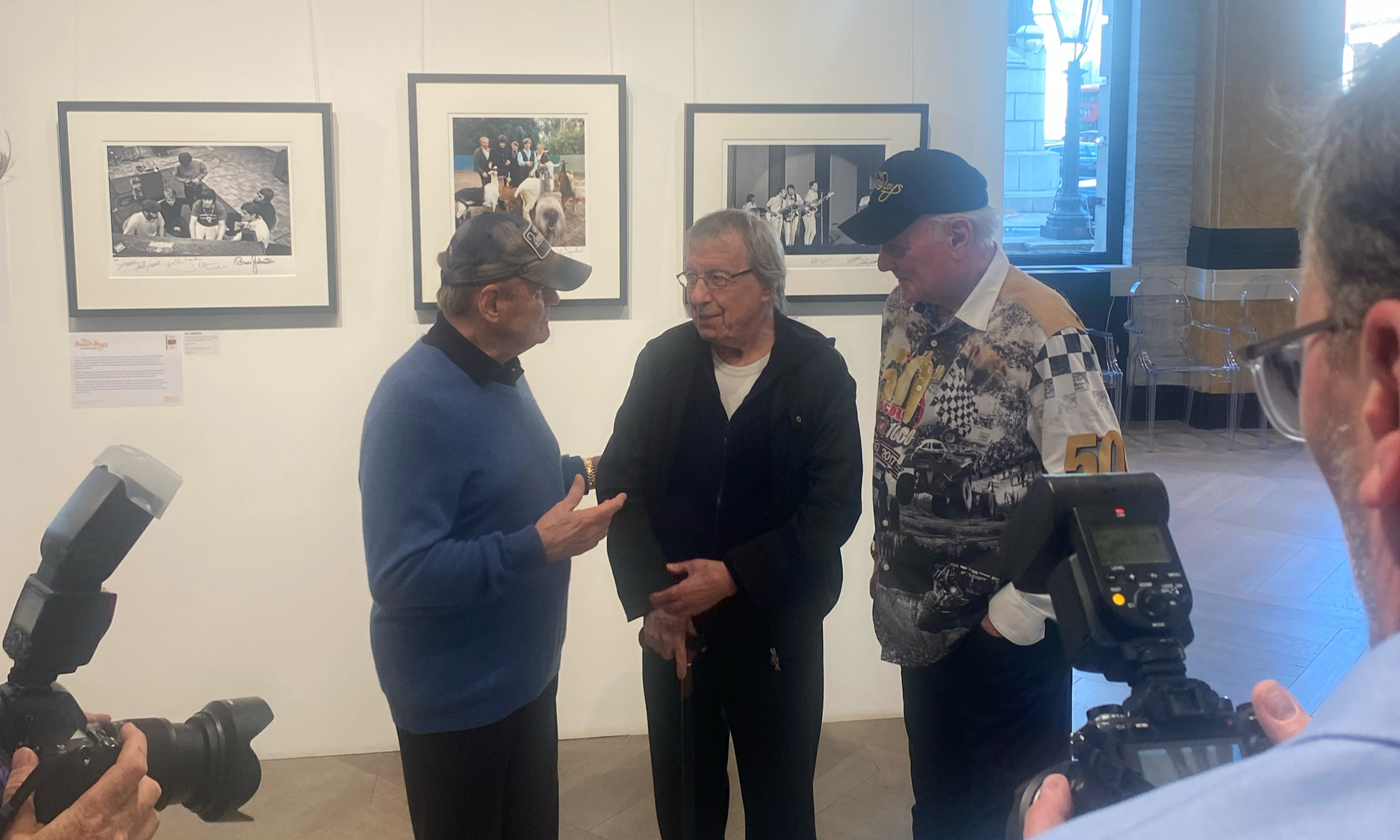
Beach Boys members Bruce Johnston and Mike Love catch up with former Rolling Stones bassist Bill Wyman at a Iconic Images Gallery in London.
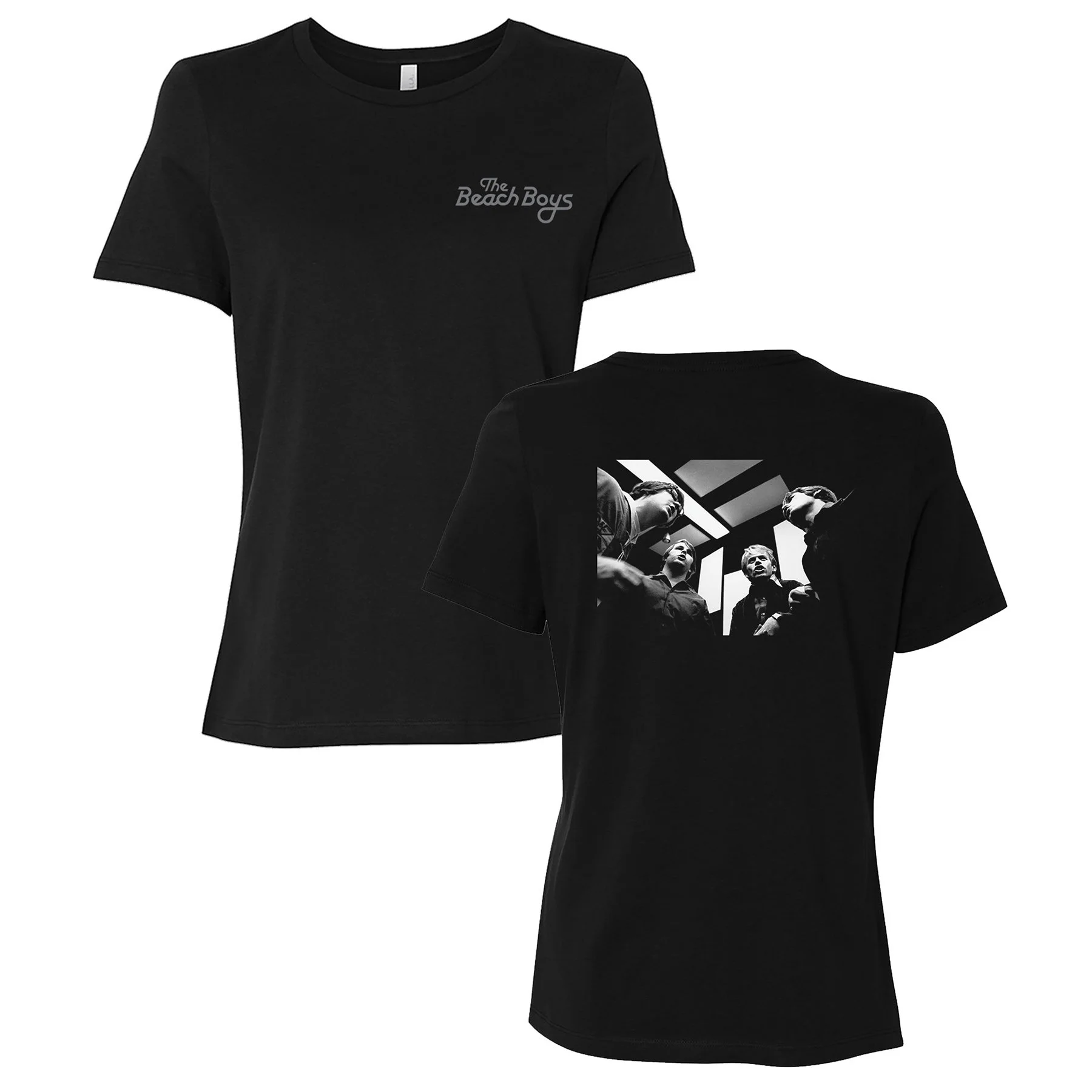
New print-on-demand merchandise was developed for exclusive sale through the band's official website, creating an accessible way for fans to engage with the newly curated photography.
Beach Boys members Bruce Johnston and Mike Love catch up with former Rolling Stones bassist Bill Wyman at a Iconic Images Gallery in London.
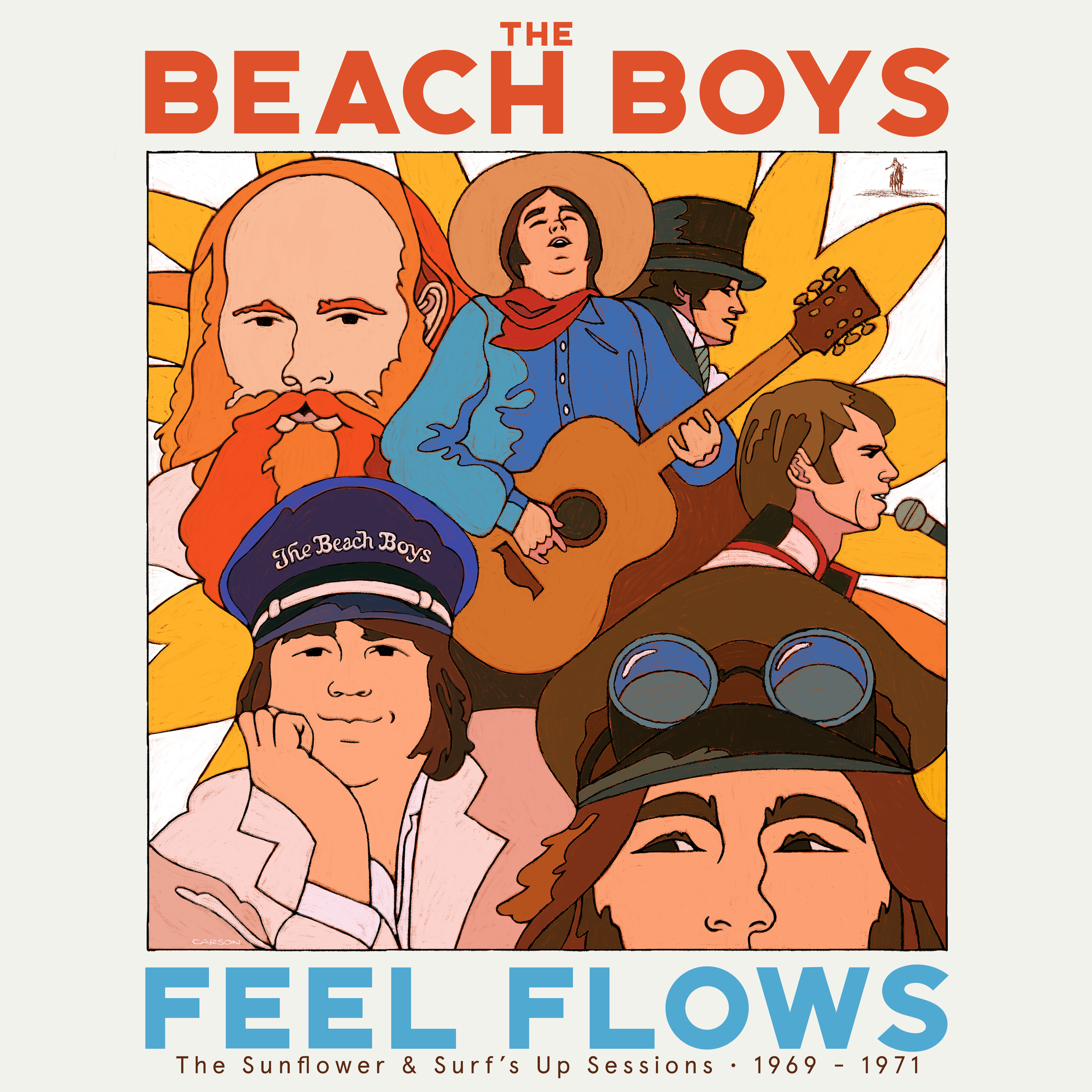
In collaboration with the band, we also produced affordable limited-edition art prints commemorating significant legacy moments, including the Feel Flows and Sail On Sailor reissues and the 60th anniversary of The Beach Boys' first appearance at the Hollywood Bowl.
A Coordinated Legacy
Together, these initiatives transformed a dispersed body of photography into a coordinated collection of cultural and commercial assets. They strengthened provenance, clarified image rights and gave The Beach Boys and their management greater control over the photographs' presentation, licensing and distribution—while creating new products, experiences and revenue opportunities for the band's continuing legacy.
Key Takeaways
Dispersed history requires dedicated research. The most valuable material wasn't sitting in one archive — it was scattered across a record label, individual photographers, and their estates. Finding it required systematic outreach and relationship-building, not just a single acquisition.
Scarcity creates collector value. Selecting a handful of exclusive, band-signed images from thousands of candidates — rather than releasing everything at once — created genuine rarity and drove demand across both the book and the fine-art print program.
One archive can support many products. The same underlying photography fueled a sold-out collector's book, gallery exhibitions on three continents, documentary-linked events, and accessible print-on-demand merchandise — each reaching a different audience at a different price point.
A scattered history can still become a unified legacy — with the research, relationships, and strategy to bring it together.