
B.B. King and Bringing the King of the Blues to a Global Audience
How 1966 Americas helped the B.B. King Museum launch his first international exhibition, turning a landmark Brazilian showcase into the opening chapter of a worldwide centenary strategy.
At a glance
A first for Brazil: The first exhibition in the country devoted entirely to B.B. King's life and legacy
International trust: Nearly 50 significant artifacts — including his first Grammy Award and final Lucille guitar — safely transported and returned across two continents
Reach: A 5,000+ sq. ft. exhibition at one of Brazil's leading cultural institutions, generating national television, print, and digital coverage
A Legacy Rooted in One Place, Reaching for the World
The B.B. King Museum and Delta Interpretive Center in Indianola, Mississippi, is one of America's finest museums dedicated to a single musician. Built at a cost of nearly $20 million, it preserves an extraordinary collection of memorabilia, photographs, films, and archival material documenting the life and career of the King of the Blues — and serves as his final resting place. Before the COVID-19 pandemic, it drew approximately 75,000 visitors a year, including international tourists traveling the Mississippi River cruise routes and the Mississippi Blues Trail. The pandemic forced a temporary closure, and international attendance remained significantly reduced in the years that followed.
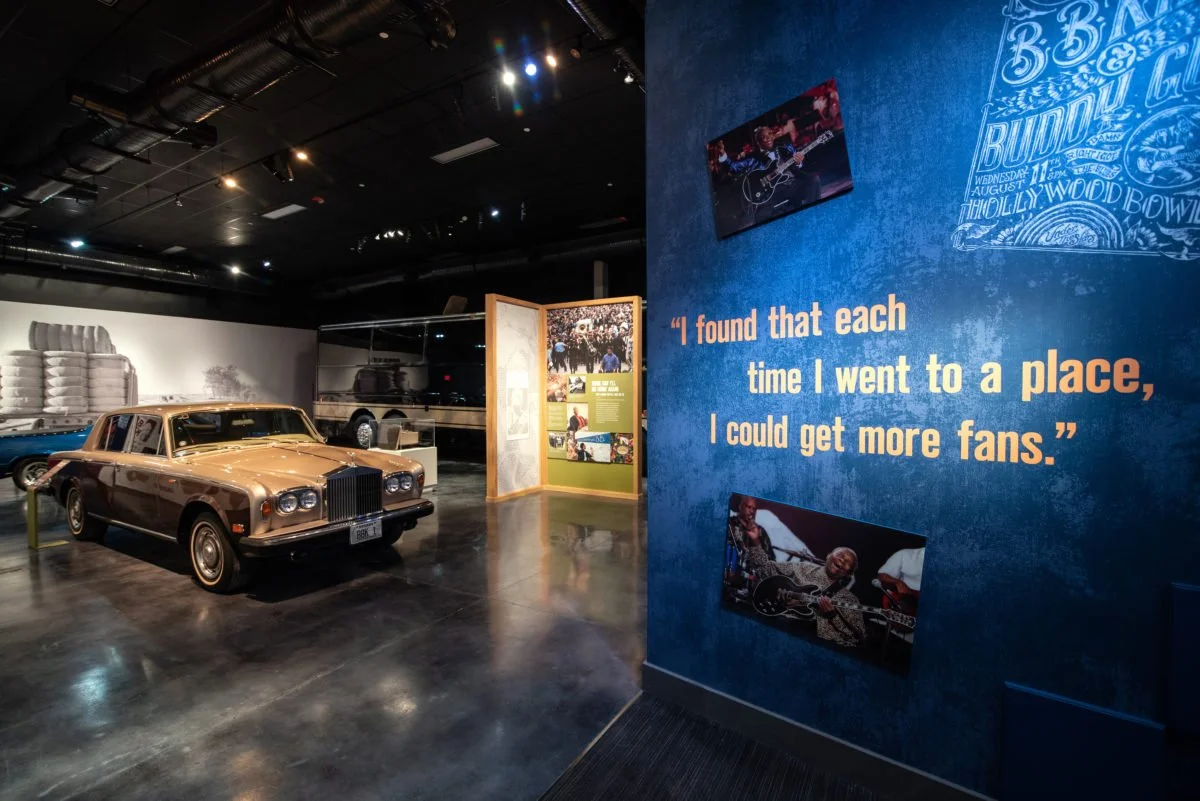
Exhibit that focuses on the last decade of B.B. King’s life at the B.B. King Museum and Delta Interpretive Center. Photo courtesy of The B.B. King Museum and Delta Interpretive Center.
Beyond the pandemic's impact, the museum's board recognized a larger, structural challenge: only a fraction of B.B. King's worldwide audience would ever be able to visit this relatively remote corner of Mississippi. With the centenary of his birth approaching in 2025, the museum wanted to find new ways to bring his story directly to fans around the world, rather than waiting for fans to come to it.
Finding the Right Market
1966 Americas evaluated a range of long-term opportunities for the centenary, including a commemorative book, interactive holographic experiences, digital access to the museum, and an international exhibition. The major international exhibition offered the most immediate opportunity to reach substantial new audiences, so we identified priority countries based on where B.B. King had performed frequently during a touring career that spanned more than 90 countries, and where his music continued to attract significant audiences through streaming.
Brazil stood out as the natural first market. B.B. King and his band had performed more than 50 concerts there, including an outdoor show at Ibirapuera Park in São Paulo attended by an estimated 40,000 people, and at the time of the exhibition, Brazil was his third-largest streaming market worldwide.
Curating A Better World Somewhere
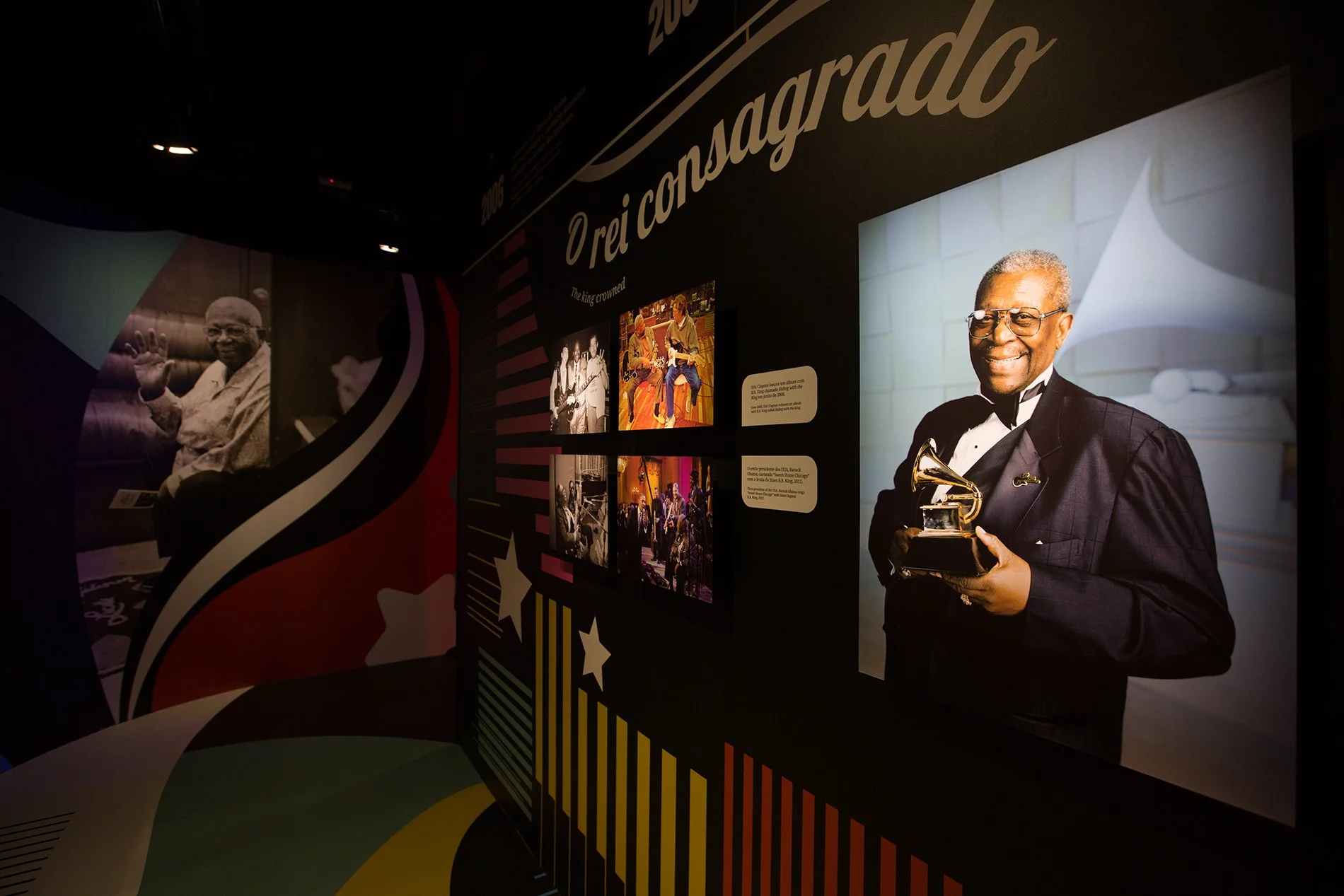
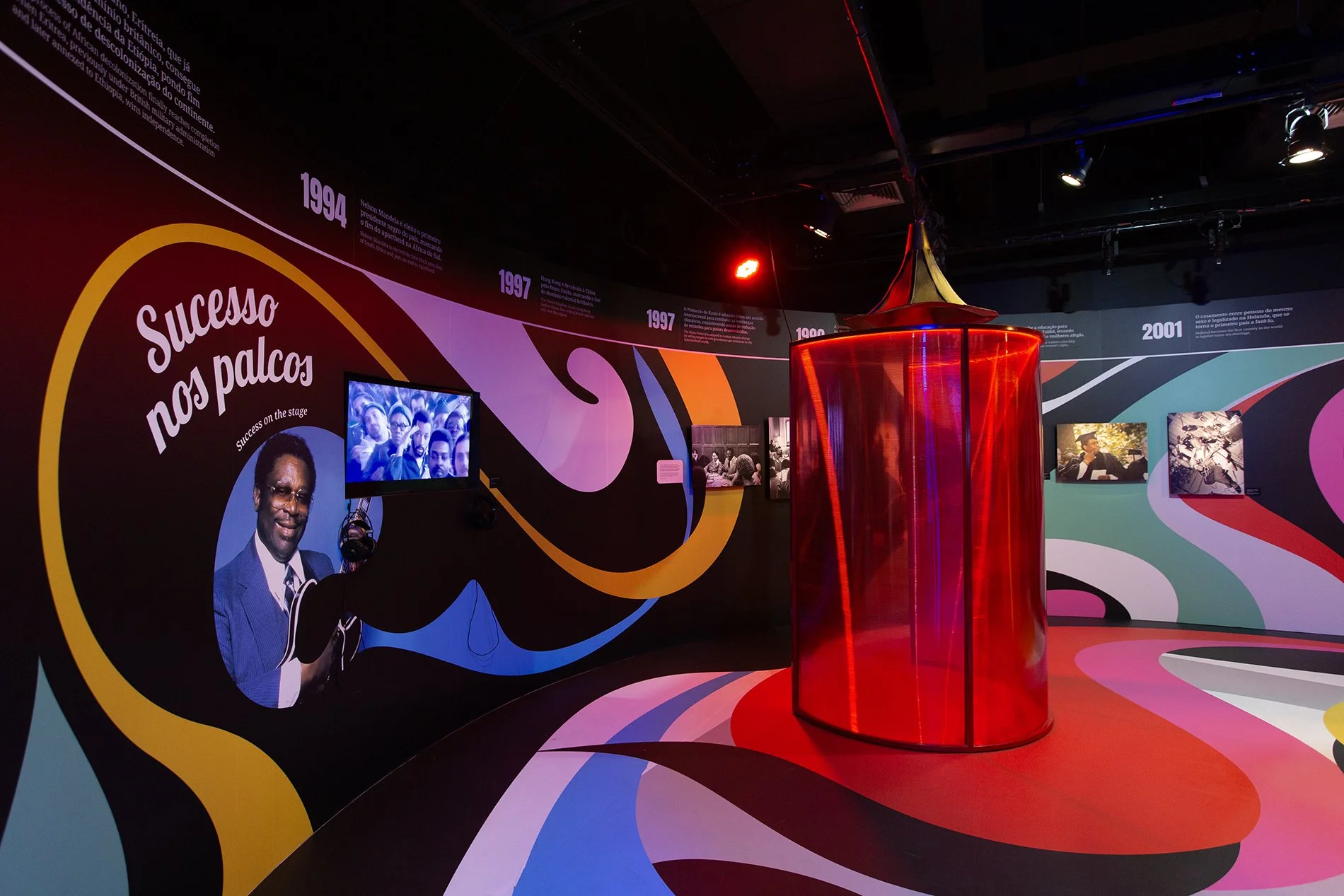
In July 2023, 1966 Americas helped curate and launch B.B. King: A Better World Somewhere at the Museum of Image and Sound in São Paulo (MIS SP) — a leading Brazilian cultural institution dedicated to music, film, and photography — in partnership with the B.B. King Museum in Indianola. It was the first exhibition in Brazil devoted entirely to his life and legacy: a 5,000+ sq. ft. presentation running through October 2023.
Nearly 50 significant objects were loaned to MIS SP for the exhibition, including B.B. King's first Grammy Award, his final Lucille guitar, and a jacket worn at the Montreux Jazz Festival, complemented by hundreds of photographs, films, and other archival materials. Given the value and irreplaceability of these objects, Chris Flannery personally hand-delivered and returned all fifty pieces — carrying them from Mississippi to São Paulo and back again — to ensure their safe passage across two continents.
Rather than simply displaying memorabilia, the exhibition used B.B. King's life as a lens onto the broader social history of 20th-century America. It traced his journey from the segregated, Jim Crow-era Mississippi of his birth, through his rise as a musician who crossed racial and cultural boundaries during the 1960s, to his eventual standing as a globally recognized artist who collaborated with musicians across generations, including U2 and Eric Clapton.
The exhibition also highlighted his exceptional entrepreneurial drive — from forming and managing his own band in the 1950s while maintaining a schedule of more than 300 performances a year, to continuing to tour well into his eighties — and a section devoted to his work as a philanthropist and advocate for prison reform, anchored by his landmark 1970 performance at Cook County Jail, the dozens of prison concerts that followed, and his role in helping establish the Foundation for the Advancement of Inmate Rehabilitation and Recreation (FAIRR).
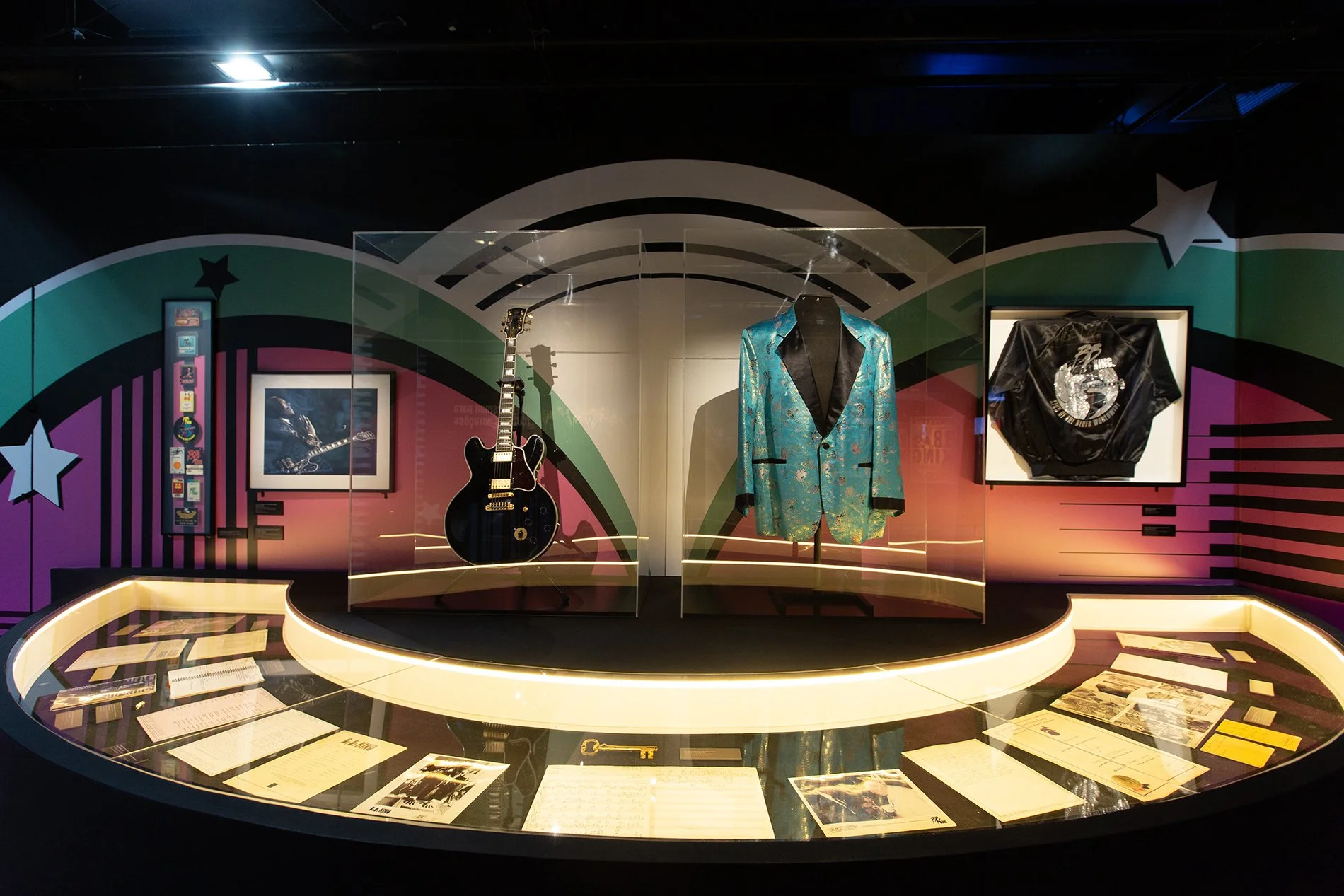
B.B. King’s final Lucille guitar and a jacket he wore at Montreux Jazz Festival on display at the São Paulo Museum of Image and Sound.
Exceeding Expectations
A Better World Somewhere exceeded the museum's attendance expectations and generated extensive coverage across Brazil's leading television networks, newspapers, magazines, and digital media platforms. Coverage included features on Antena 1, one of Brazil's largest radio networks, and a segment in Istoé, the Brazilian equivalent of Newsweek, alongside coverage from Rolling Stone Brazil. The exhibition proved that B.B. King's story — and the broader story of the Blues — could resonate with an international audience far beyond Mississippi.
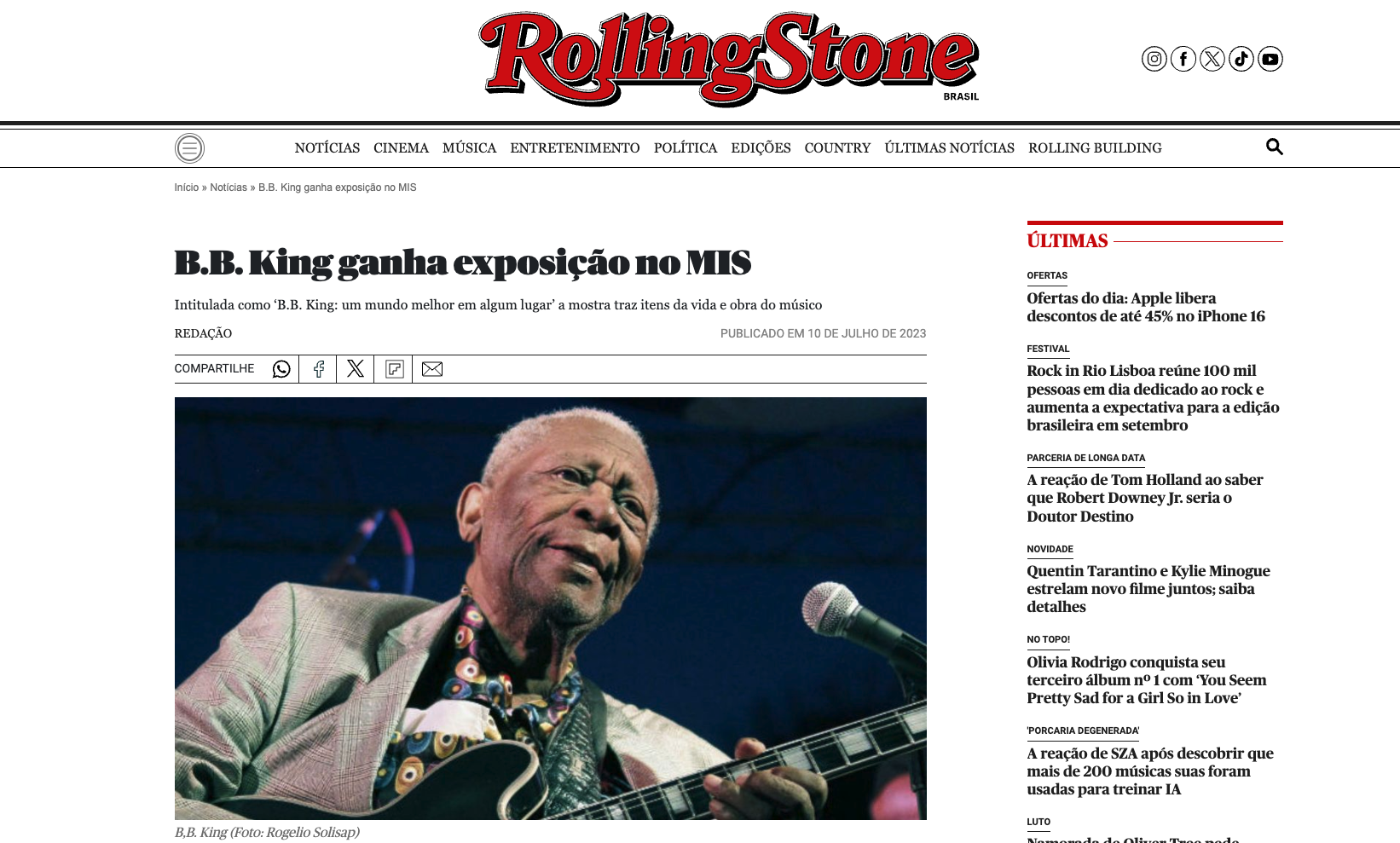
Rolling Stone Brazil coverage of B.B. King: A Better World Somewhere.
Key Takeaways
Go where the fans already are. Touring history and streaming data pointed directly to Brazil as the strongest first international market — a data-informed approach that outperformed a purely geographic or opportunistic one.
Context turns objects into a story. Rather than a static display of memorabilia, the exhibition used B.B. King's artifacts to explore race, social change, entrepreneurship, and cultural influence — giving international audiences with no direct connection to Mississippi a way into his legacy.
A remarkable legacy, rooted in one place, can still find its way to the world — with the right strategy and the right partner to carry it there.